
Apartment Pet Setup: Small-Space Supplies for City Dogs and Cats
A practical guide to outfitting a small city apartment for a dog or cat, covering space-saving beds,...

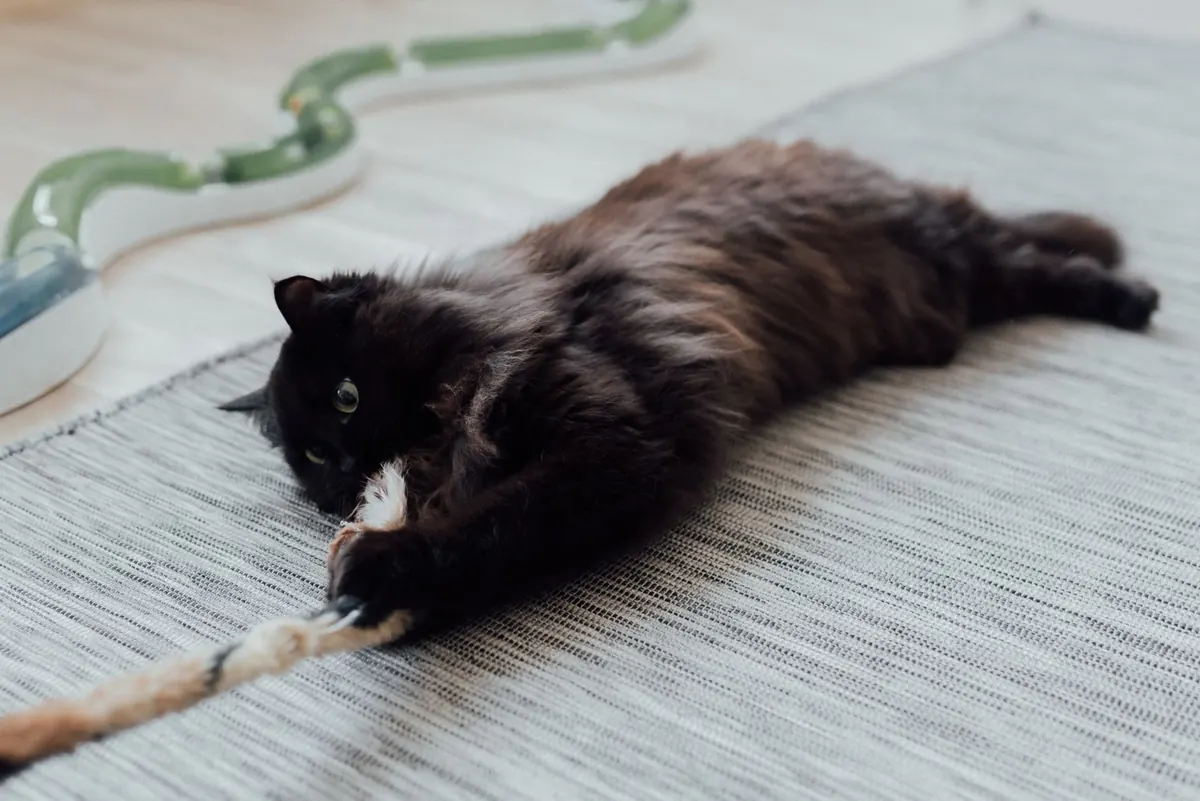
Almost every cat household has one: a basket of toys the cat sniffed once and never touched again. The feathers were bright, the bell jingled, the little mouse looked exactly like a mouse — and she walked away. Most of the time the toy isn't defective and the cat isn't ungrateful. The toy simply doesn't match how that cat likes to hunt.
Cat toys are inexpensive enough to experiment with, but a little knowledge saves wasted money and prevents a few genuine safety risks. These are the mistakes that come up most often, and how to avoid them the next time you're standing in the pet aisle.
Watch your cat for ten minutes before you buy anything. Cats tend to favor one or two hunting patterns, and the toy has to fit the pattern.
If you're not sure which one you have, spend a week with a wand toy and a rolling ball. Whichever gets the most dramatic reaction tells you where to put your money.
Size causes two different problems. Toys that are too small can be swallowed, and toys that are too large get ignored.
A toy small enough to disappear completely into a cat's mouth is a choking hazard. Anything with a string, ribbon or elastic tail attached deserves a hard look as well: if a cat swallows a length of string, it can bunch up in the intestines, and that is a genuine emergency. Keep wand toys for supervised play and put them away afterward — a wand left on the floor is an invitation to chew through the cord.
At the other end, a jumbo plush mouse the size of a kitten may look adorable on a shelf but is awkward to bat, grab or carry. A good rule: your cat should be able to grip the toy with both front paws, bite it, and still see past it. For kickers, look for something roughly the length of your cat's body.
Texture is where cats are fussiest, and it explains why one cat ignores a plush mouse while another carries it around for weeks. Pay attention to what your cat already mouths, bats and carries:
Whatever you choose, check how it's assembled. Glued-on eyes, sequins, ribbons, thin elastic and loosely stitched tails all come off eventually. If you can pull a piece off with a fingernail, assume your cat will get it off with teeth. Bells are worth a second thought too — many cats find a loud, constant jingle irritating rather than exciting, and a bell near the face can put a shy cat off entirely.
Catnip and silvervine are worth trying, but not every cat responds, and the response is often inherited. A non-responsive cat isn't broken; it just needs movement instead of scent.
A cheap piece of string dragged like an injured insect beats an expensive feather wand waved in circles. Cats are wired to notice movement that looks like prey: fast, then frozen, then fast again. A toy that moves at a steady speed stops reading as prey within seconds.
The same logic applies to automated toys. They're handy when you're out of the house, but a battery-powered toy with one fixed motion pattern tends to lose its appeal quickly. Rotate them, and don't rely on them for the interactive part of the day.
One more note on laser pointers: they can be genuinely fun, but a cat who never catches anything can end a session wound up and frustrated. Finish every laser game by landing the dot on a real toy or a treat, so the hunt has an ending.
Cats get bored of the same toy in the same room, even a favorite. Instead of buying more, put two-thirds of the collection away in a sealed bag or box and bring a few pieces out each week. A toy that's been out of sight for a fortnight is, as far as your cat is concerned, brand new. Refresh catnip toys by sealing them in a bag with a pinch of dried catnip, and wash fabric toys that have gotten grimy or soaked with saliva.
Bring the toy home, set it on the floor, and walk away. A confident hunter will investigate within a minute or two. If nothing happens, try it on a wand, drag it past a hiding spot, or rub it with a little catnip. If your cat still ignores it after two or three separate attempts on different days, don't force it — that toy is simply for a different cat.
Before it becomes a regular in the rotation, run this check:
Buy two or three toys that suit your cat's hunting style rather than a dozen that look good in a photo, keep the wand toys for supervised sessions, and rotate what's out on the floor. That's most of what it takes. And if you ever suspect your cat has swallowed part of a toy — especially string, ribbon or yarn — contact your vet right away rather than waiting to see what happens.
Photo: Arina Krasnikova / Pexels
A practical guide to outfitting a small city apartment for a dog or cat, covering space-saving beds,...
A practical guide to summer dog walking gear — pavement checks, paw protection, cooling items, and water...
Treat-dispensing puzzle toys turn a handful of kibble into a workout for your dog's brain. Here's how to...