Summer Dog Walking Gear: Hot-Weather Essentials for Pavement Safety
A practical guide to summer dog walking gear — pavement checks, paw protection, cooling items, and water...


A studio on the fourth floor of a walk-up. A one-bedroom where the "dining area" is the strip of floor between the fridge and the front door. A railroad flat with a hallway wide enough for exactly one person and one leash. If you share a small city apartment with a dog or a cat, you already know that most pet gear is built for houses with yards and closets to spare. The fix isn't buying less. It's buying for the space you actually have.
Walk your apartment the way your pet does: front door to kitchen, couch to bathroom, bed to window. Those paths need to stay clear, and they'll tell you where a bed, crate, or litter box can live without turning into an obstacle course.
Grab a tape measure and a roll of painter's tape. Mark the footprint of anything you're considering on the floor and leave it there for a day. A crate that looks compact in a product photo can feel enormous in a hallway. Two days of stepping over tape costs nothing; a return shipping label does not.
Pay attention to the dark routes too. If you're stumbling toward the coffee maker at 6 a.m., the dog bed shouldn't be the first thing your bare foot finds.
In a small apartment, pet furniture needs two jobs: a place for your animal, and a place for something else.
A low-profile bolster bed slides under a console table or a windowsill ledge and disappears when guests arrive. If you're crate training, look at crates designed to double as end tables, or measure your existing furniture and see what fits beneath or beside it. Buy for the interior dimensions: your dog needs to stand without ducking and lie flat with room to stretch. An oversized crate eats floor space you don't have; an undersized one your dog won't use.
Washable covers matter more in apartments than anywhere else, because bedding and laundry share the same closet. Look for beds where the cover unzips and the foam holds its shape through a few dozen cycles.
Go vertical. A wall-mounted shelf run above a doorway, a perch that clamps to a windowsill, or a cleared top shelf on a bookcase gives a cat territory without borrowing floor space. Suction-cup window perches work well on clean, smooth glass and hold a surprising amount of weight, but check the rating and the glass before you trust one with a determined jumper.
Top-of-fridge beds work in galley kitchens. So does the top of a wardrobe, if you add a blanket so it doesn't become a hair magnet.
Most apartment cats end up with their box in a bathroom corner, a closet, or behind a door that never fully opens. A few adjustments make that workable.
High-sided or top-entry boxes cut down on scatter, though some cats resist a covered box at first. If you switch, keep the old setup nearby for a week so your cat can choose. A honeycomb or two-layer mat at the exit catches more tracked litter than a plain rug, and it shakes out over the trash rather than into your hallway.
If you can manage two boxes in two locations, do it. If your apartment only allows one spot, keep it scooped daily and washed regularly, and keep it away from food and water bowls. Cats dislike eating next to a litter box, which is a reliable recipe for a hunger strike or an accident.
If your cat suddenly stops using the box, treat it as a health question first. Call your vet before you rearrange furniture or assume it's behavioral.
The goal is a single landing zone by the door and one bin in the kitchen, not gear in every room. A few containers do most of the work:
City walking is a series of small negotiations: elevator doors, curb cuts, a reactive dog on the other side of the sidewalk. The right kit keeps those moments short.
Practice elevator manners at home: sit before the doors open, step to the back corner, keep the leash short. It takes a week of treats and saves years of awkward rides.
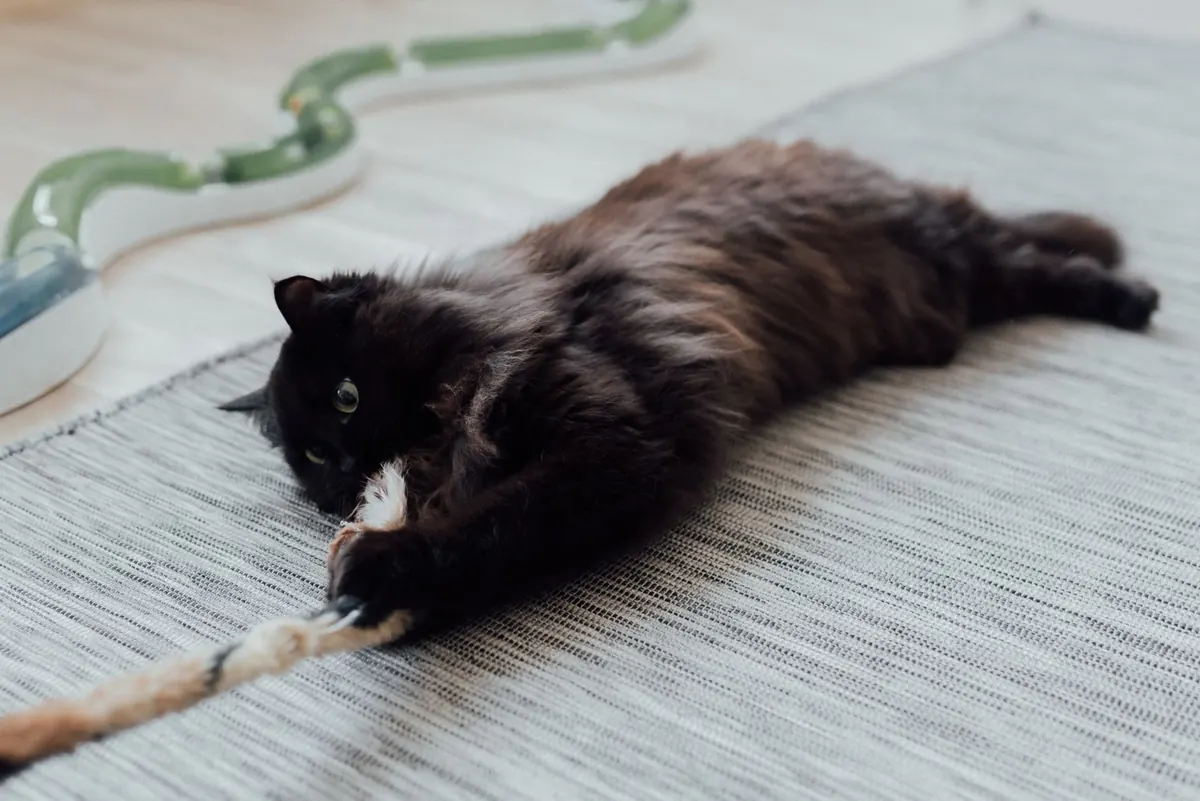
Thin walls change the toy list. Hard rubber chews, snuffle mats, and food-stuffed toys keep a dog working quietly for twenty minutes, which is often more tiring than a rushed lap around the block. For cats, a wand toy used over a bed or couch burns energy without rearranging the living room.
Skip the squeaky toy at 10 p.m. Your downstairs neighbor will remember.
Fifteen minutes once a week keeps a small apartment from smelling like a kennel. Wash bowls and the water dish, launder bed covers and the litter mat, refill the food bin, wipe down the landing zone, and check leash hardware and harness stitching for fraying.
Then do one honest pass: is anything in your space unused? Donate the bed your dog ignores, the carrier your cat has outgrown, the leash you never reach for. In an apartment, every object you remove gives back room to the animal that actually lives there.
Photo: chienba / Pixabay
A practical guide to summer dog walking gear — pavement checks, paw protection, cooling items, and water...
Most cat toys fail for predictable reasons: the wrong size, an off-putting texture, movement that doesn't...
Treat-dispensing puzzle toys turn a handful of kibble into a workout for your dog's brain. Here's how to...