Apartment Pet Setup: Small-Space Supplies for City Dogs and Cats
A practical guide to outfitting a small city apartment for a dog or cat, covering space-saving beds,...

Switching dog food sounds like the easiest chore on the list: finish the old bag, open the new one, scoop. Then two days later you're standing in the yard at 2 a.m. with a flashlight, wondering what went wrong. Nothing went wrong, exactly. Your dog's digestive system simply met a new recipe all at once, and it needed more time than that.
The fix is unglamorous and effective: mix the old food with the new one and shift the ratio a little each day. Here's how to do it, how to read what your dog's body is telling you, and when to slow down.
A dog's gut runs on routine. The mix of bacteria and digestive enzymes in the intestines settles into a pattern based on what your dog eats most days, and it does best when the incoming food looks roughly like the outgoing food. Change the protein source, the fat level, or the fiber content overnight, and that system has to recalibrate.
The result is usually mild: gas, a rumbling belly, a stool that's softer than usual. Sometimes it's worse — vomiting, diarrhea, a dog who won't eat. None of that means the new food is bad. It means the switch was too fast.
It also isn't only about the main ingredient. Two foods can both list chicken first and still differ widely in fat content, fiber, and the grains or legumes around it. That's why a same-flavor, different-brand switch deserves the mixing plan too.
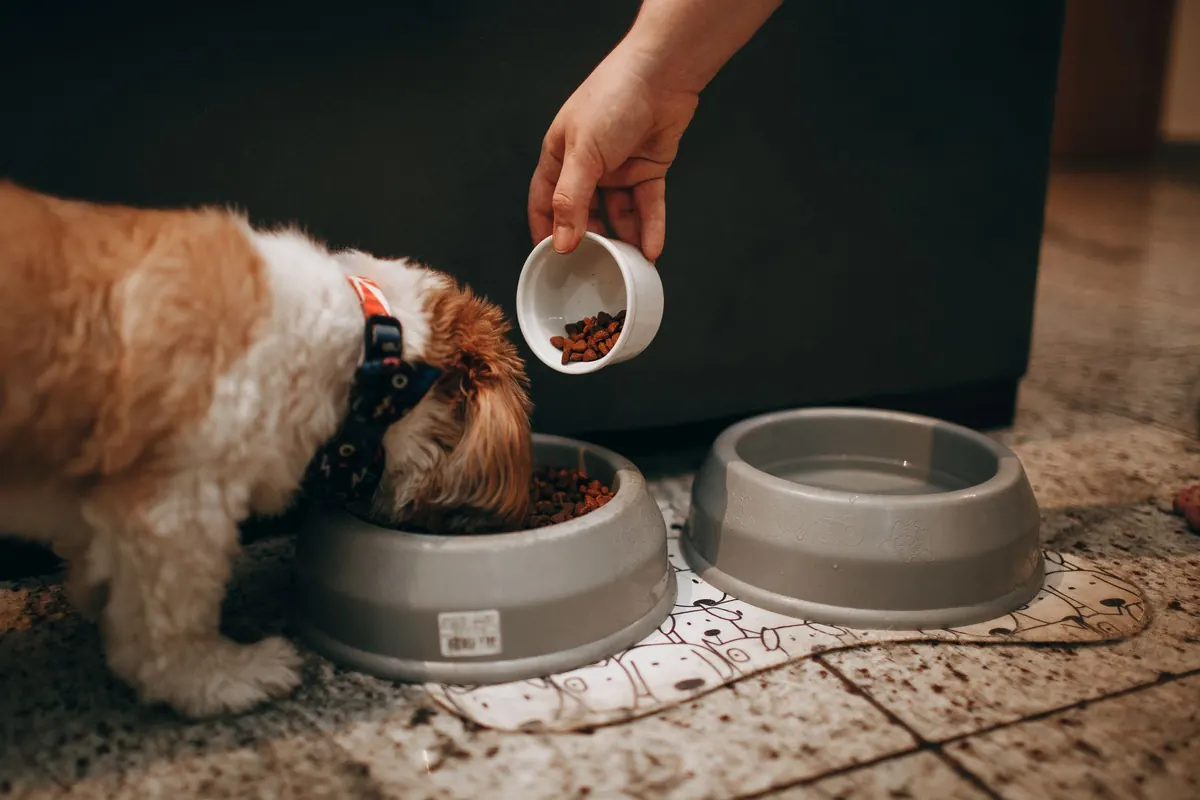
This schedule works for most healthy adult dogs. Measure by volume with the same scoop every time, and mix the two foods together in the bowl rather than offering them side by side, so your dog can't pick out the pieces it likes and leave the rest.
Keep meals at the same times you normally feed, and keep portions the same size unless the new food has a different calorie density. If the bag lists a different feeding amount, follow it — but make that change gradually rather than jumping straight to the full new portion on day one.
Moving from canned to kibble, or the reverse, is as much about texture as nutrition. Mix the two together and let the ratio drift the same way. If your dog licks the wet food off and leaves the kibble behind, a spoonful of warm water over the dry pieces helps, and a slightly longer transition usually solves it.
Some dogs need a longer runway. Stretch the same plan across ten to fourteen days, and hold at each ratio for an extra day or two before moving on. If day three of a 50/50 mix brings loose stools, stay at 75/25 for a few more days. There is no prize for finishing the transition on schedule.
Dogs who have had digestive trouble before, puppies, and seniors tend to do better with the slow version. Slow is also the right choice when you're switching because of a suspected food sensitivity — in that case, your veterinarian should guide both the change and the timeline.
Mild gas and a slightly softer stool in the first day or two of a new ratio are common and often settle as the mix moves forward. What you're really watching for is a trend: better each day, or worse?
If things get worse rather than better, stop increasing the new food and go back to the last ratio that worked.
Call your veterinarian if you see repeated vomiting, diarrhea that lasts more than a day or contains blood, refusal to eat for more than a day, or a dog who seems dull, painful, or simply off in a way that worries you. Puppies and small dogs can dehydrate quickly, so don't wait it out at home.
If the change is tied to a diagnosis — allergies, kidney issues, weight management, a prescription diet — follow your vet's instructions rather than a generic schedule. Prescription diets sometimes need tighter control, and your vet may want to adjust the timeline or check bloodwork along the way.
An uneventful transition is exactly what you want. Measure, mix, shift the ratio every couple of days, and let your dog's stool be your guide. If you hit a snag, hold steady or back up a step. Almost nothing about a food change is urgent, and a few extra days of mixing costs nothing.
Write the start date on the calendar and jot a quick note about each day's stool. That small record tells you whether to move forward, hold, or call the vet — and it turns a guessing game into something you can actually manage.
Photo: Helena Lopes / Pexels
A practical guide to outfitting a small city apartment for a dog or cat, covering space-saving beds,...
A practical guide to summer dog walking gear — pavement checks, paw protection, cooling items, and water...
Most cat toys fail for predictable reasons: the wrong size, an off-putting texture, movement that doesn't...