Apartment Pet Setup: Small-Space Supplies for City Dogs and Cats
A practical guide to outfitting a small city apartment for a dog or cat, covering space-saving beds,...

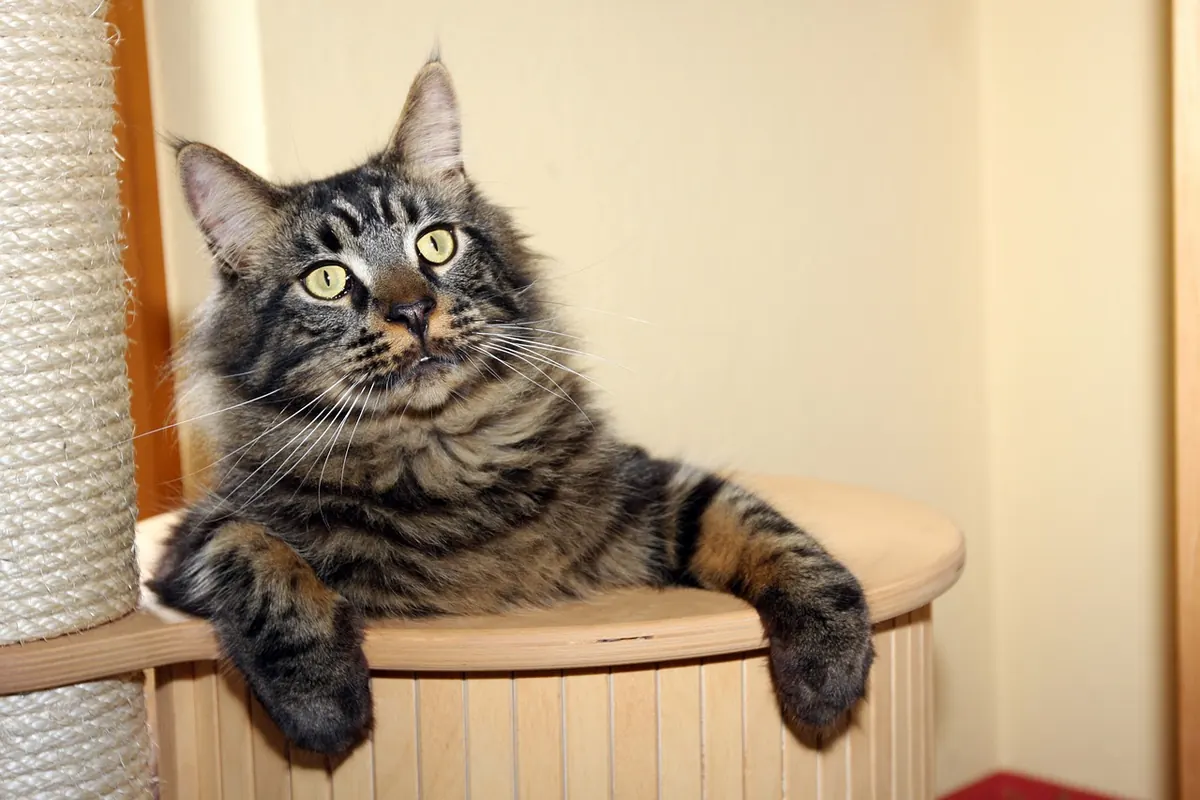
A scratching post is a deal your cat will happily make: give me something better to dig into, and the sofa is safe. Most posts fail for boring reasons. They're too short, too wobbly, made of a texture the cat doesn't like, or parked in a room the cat never thinks about. Fix those four things and your odds improve fast.
None of those failures are expensive to correct. A wider base, a taller column, a different covering, and a better location can turn a post that has been ignored for months into a daily habit — often within a week. Here's how to judge each one before you buy, and what to do if your cat still walks past it.
Scratching does three jobs at once. It sheds the dead outer shell of the claw. It stretches the shoulders, back, and front legs in one long movement. And it leaves scent from glands in the paws along with a visible mark, which is why a cat returns to the same sofa arm day after day.
That last job explains most placement problems. Cats scratch where something matters to them — near a sleeping spot, beside a doorway they patrol, or right where the family gathers. The post has to go there, not in the spare room.
It also explains why a cat keeps shredding a ruined chair even after you've bought a replacement. The old spot has history written into it. You can't erase that history, but you can build a new one on the post, and that's a matter of location and patience rather than willpower.
Watch your cat scratch something they shouldn't. Front paws reach above the head, the back arches, and the whole body extends. A post that stops at chest height interrupts that movement, so the cat walks off and finds a doorframe instead.
To find your cat's number, hold a wand toy or a treat above their head and see how high they reach at full stretch. Add a few inches of margin. For most adult cats that means a post roughly 28 to 32 inches tall, and taller for large breeds or long-bodied cats. The scratching surface should run the full height too, since cats usually claw the upper half.
A short post is also less stable, because the same narrow base has to support a taller body leaning against it. Height and steadiness tend to rise and fall together.
Some cats stretch up a vertical post. Others lean into a sloped scratcher or dig at a flat pad on the floor. If your cat scratches the carpet while lying down, a flat corrugated pad near their favorite spot may work better than any tall post. Wall-mounted scratchers suit cats who like to brace against something solid.
You can usually read the preference off the damage. Shredded vertical corners of a sofa point to a vertical post. Torn carpet along a hallway suggests flat or angled. Ripped upholstery on a seat cushion suggests a cat who digs downward and wants something solid under their paws.
A post that matches your living room is worth nothing if your cat refuses to touch it. Texture is the deciding factor, and it's the one thing you can't judge from a photograph.
Tightly wound sisal on a solid core is the most reliable choice. Run a fingernail down the rope; if it slips into gaps between windings, the rope will shed and unravel quickly. Dense, uniform wrapping lasts years. Loose wrapping lasts weeks.
Cheap, satisfying, and messy. Many cats love it, and replacement pads cost little. Excellent for testing whether your cat prefers a flat or angled surface. Expect to sweep up flakes, and budget on replacing the pad every few months if it becomes the favorite.
Popular, but risky. Loose loops snag claws, and a cat who learns that carpet is scratchable may extend the habit to rugs and stairs. If you do choose carpet, look for a tight, low-pile weave with no loops.
Durable and natural. Some cats take to a bare wood post or a piece of bark-covered branch immediately; others ignore it. Check for splinters before you bring it inside. Softwoods like pine mar the fastest, which is part of the appeal for cats and one reason these posts are messy.
Cats have individual preferences, and the only reliable test is the cat. Before spending on a large cat tree, buy two inexpensive scratchers in different textures and orientations, set them side by side, and see which one gets shredded first. Then buy the good version of the winner.
A post that moves when the cat pushes it is a post the cat will stop using. Cats want to lean their full weight into the scratch; if the column shifts, the movement feels wrong and the cat learns to avoid it. This is the most common reason a perfectly decent post sits untouched in a corner for years.
Before buying, press the post against the floor with one hand and push the column sideways with the other. It should barely move. Tall posts need a base roughly as wide as the post is tall, or a way to be bolted to a wall or wedged into a corner.
If you already own a wobbly post, you can often save it:
A stable post in a mediocre location beats a beautiful post that rocks.
The other common mistake is treating the post as decor. It gets tucked beside the bookshelf because it's beige and the bookshelf is beige. The cat, meanwhile, scratches the arm of the chair they sleep in every afternoon.
Start with the scene of the crime. If a cat is destroying one end of the sofa, put the post directly in front of that end — slightly forward of it, so the cat meets the post first. Once the habit is set, you can inch the post toward where you'd rather have it, a few inches at a time.
One post per cat is a sensible minimum, and having options in more than one room matters more than adding a second post to the same room. Good spots include:
In a two-story house, the cat needs scratching options on both floors. A cat who wakes up downstairs is not going to climb the stairs to use the post they like.
Some cats adopt a new post immediately. Others need an introduction longer than the thirty seconds you spent setting it down. A few things help, and none of them require formal training.
Give it two to three weeks of consistent placement and gentle encouragement before deciding a post has failed. If it still hasn't been touched, the problem is almost always one of the four: height, stability, texture, or location. Change one variable at a time, starting with location.
Get those right and the post stops being furniture you're hoping the cat will notice. It becomes the thing your cat heads for, and the sofa goes back to being a sofa.
A practical guide to outfitting a small city apartment for a dog or cat, covering space-saving beds,...
A practical guide to summer dog walking gear — pavement checks, paw protection, cooling items, and water...
Most cat toys fail for predictable reasons: the wrong size, an off-putting texture, movement that doesn't...